
What is a community residency?
There are a few things that make this project different from other artist residencies. Our three biggest distinctions are:
1.) shared studio space
2.) facilitator-led model
3.) community engagement
While many artist residencies focus on secluded work time, this program’s focus is to build relationships between artists that provide long-term support for their practices after they leave the program.
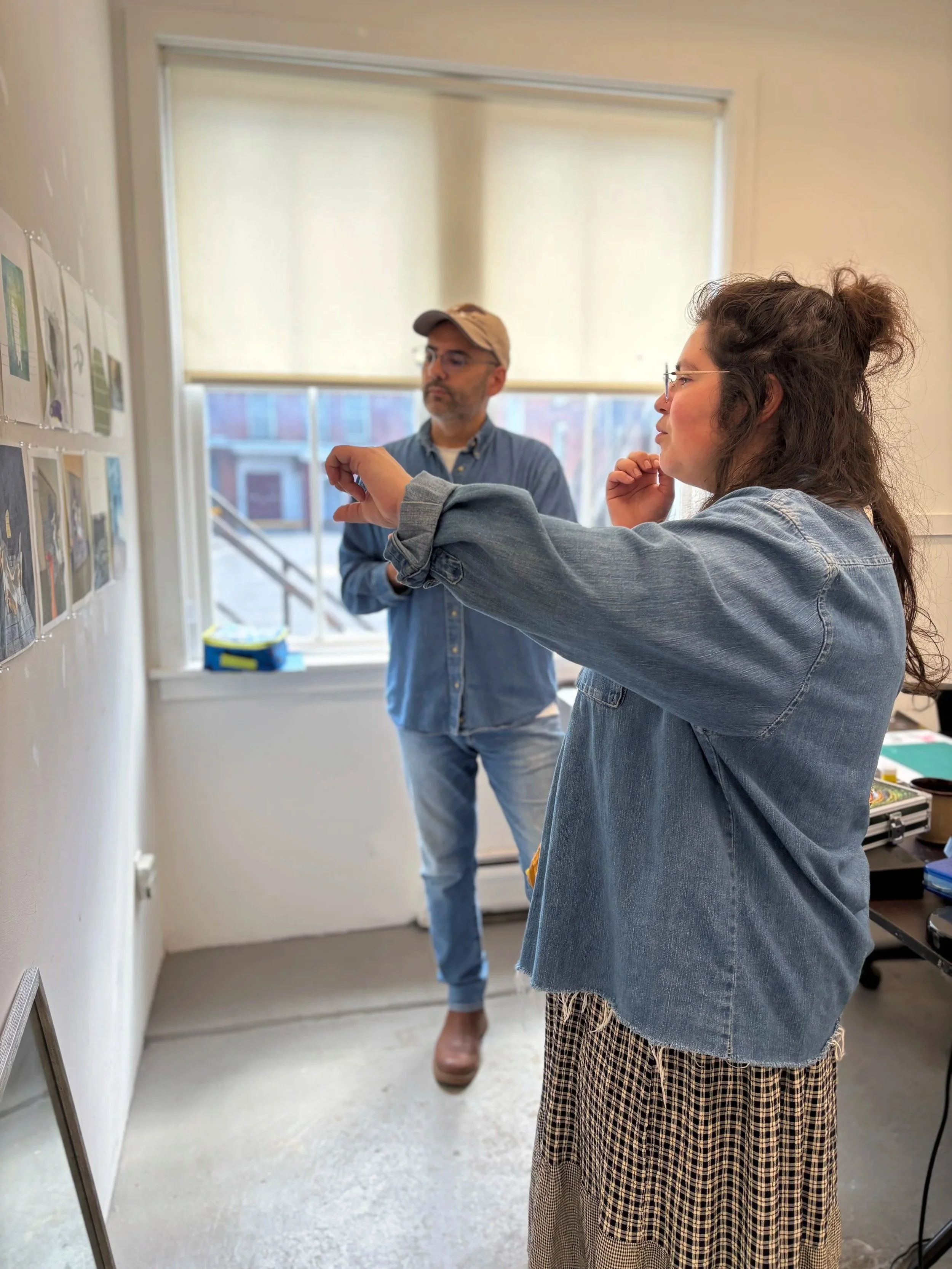
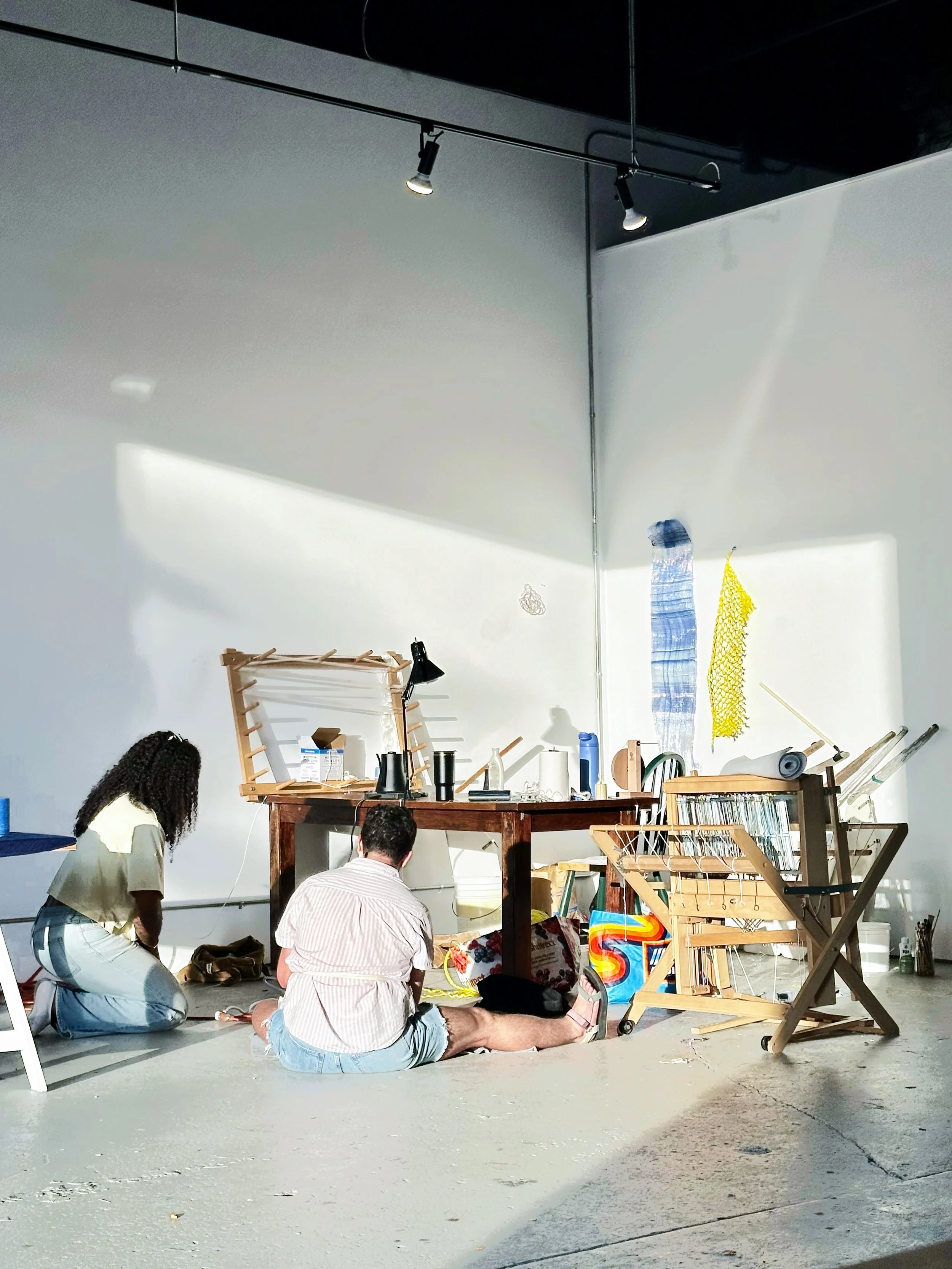
shared studio space
The community residency is based out of Light Manufacturing—in a large, shared studio space.
What began as a necessity became a venue for an open exchange of ideas and an exercise in shared vulnerability.
Artists work side by side, sharing space, ideas, and exploring together.
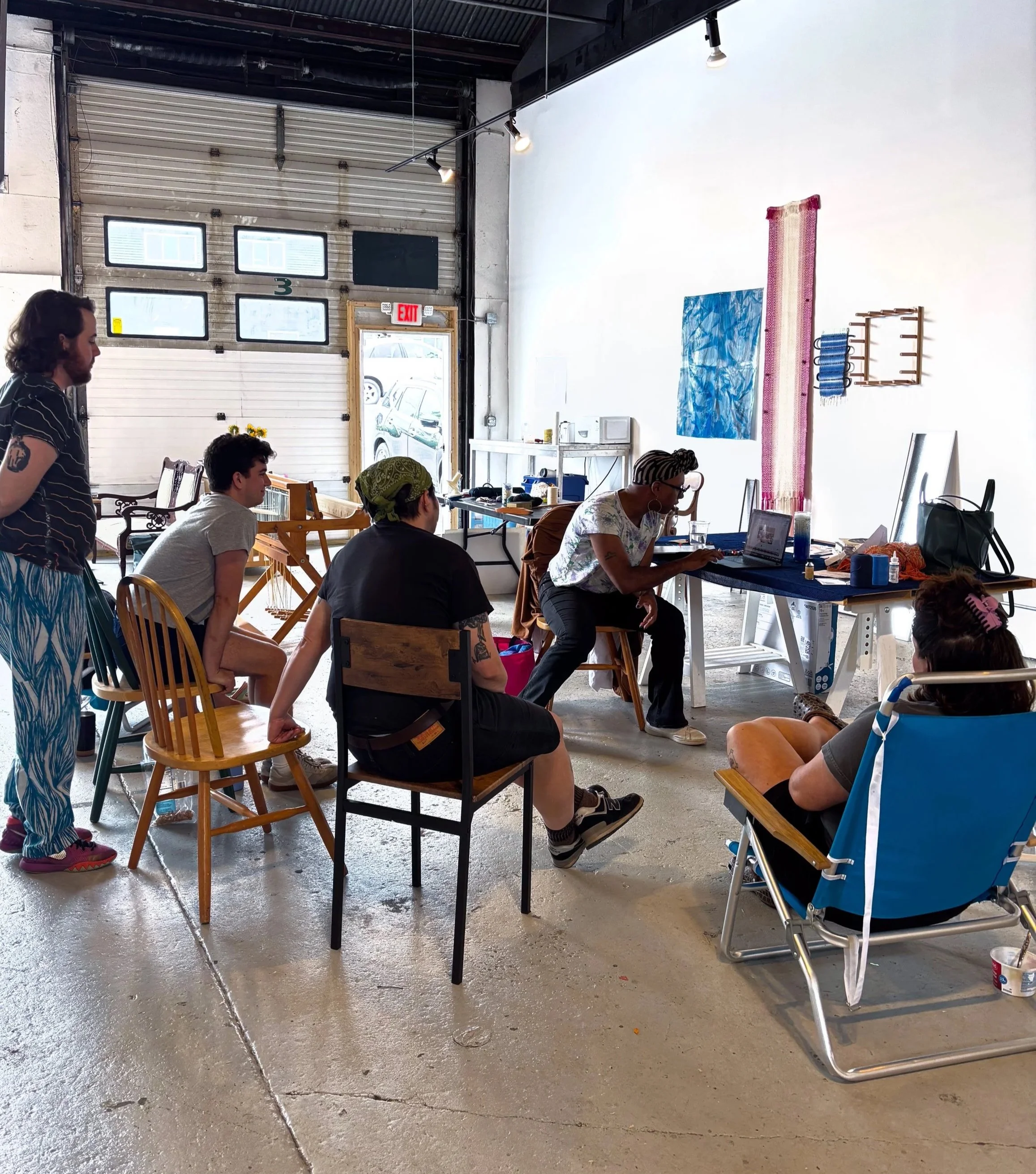
2. a facilitator-based model
This residency doesn’t use an open call. Instead, we use a facilitator-based model—one artist acts as a facilitator—intentionally researching and crafting a cohort, placing them in housing that meets their needs, and shaping their experience.
Before the residency, the facilitator conducts studio visits and utilizes their own network to find resident artists who need time and space to explore their creative practice. They consider the needs of each individual artist and what they may gain from sharing a collective space, and also work to plan studio visits with local community members.
During the residency, the facilitator acts as a host and steward, hosting events, coordinating field trips, and acting as an ambassador for the program.
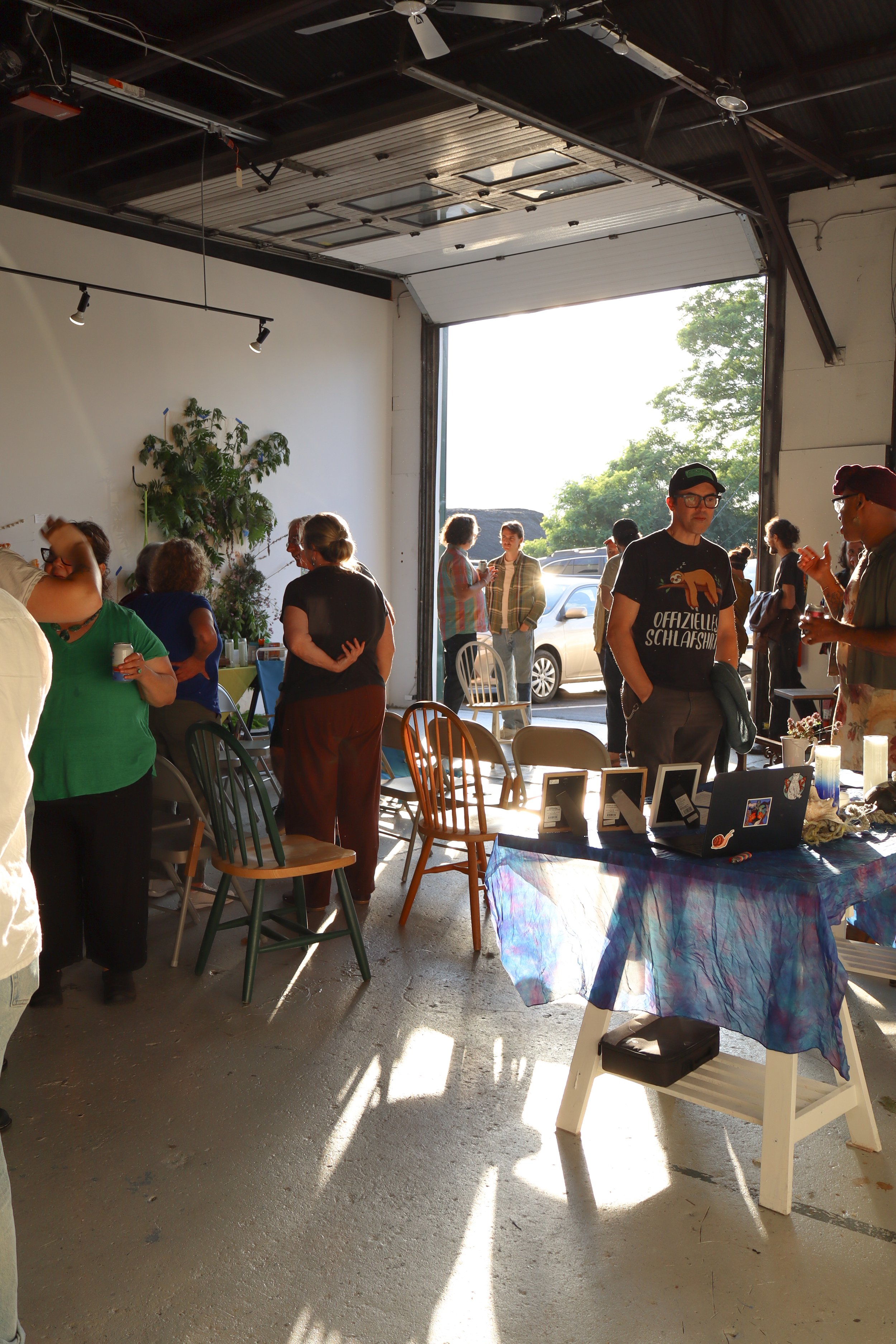
3. community engagement
Community-building is a core part of this program; not an afterthought.
Residents participate in weekly potlucks, go on group field trips, meet local arts organizers and leaders, and spend time getting to know local trans creatives in intentional settings. The goal is to immerse residents not just in their practice, but within a community of queer artists and creatives.